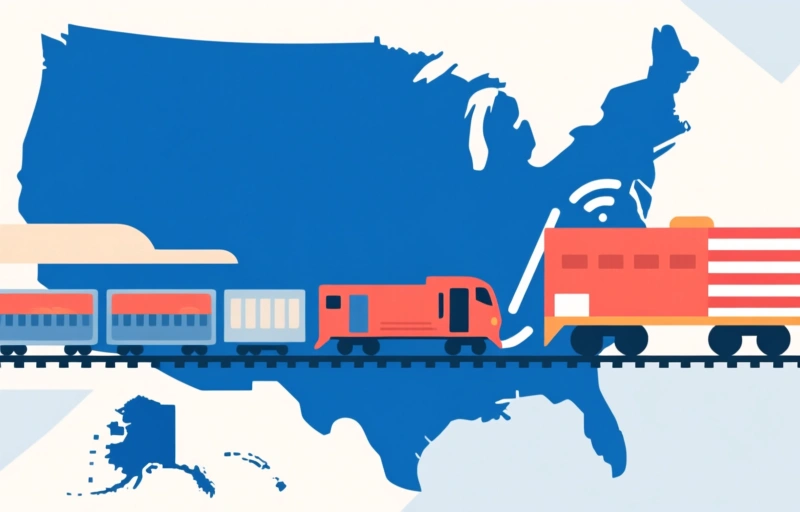
A major railroad merger could finally give the US a seamless national rail network. Here's what it means for travel, shipping, and the economy.
So, there's a big railroad merger brewing that could finally give the United States the kind of connected train network you'd expect from a major nation. And honestly, it's about time.
We've all felt the frustration of trying to travel or ship goods across the country by rail. It's often slow, fragmented, and confusing. But this merger promises to change that by creating a truly national system that links up major hubs from coast to coast.
### What This Merger Actually Means
At its core, this deal is about connecting the dots. Right now, we have several regional rail networks that don't always play nice together. The proposed merger would combine two of the biggest players, creating a seamless web of tracks from the East Coast all the way to the West.
Think of it as finally getting a single highway instead of a bunch of winding backroads. For everyday folks, that means faster passenger trains and more reliable schedules. For businesses, it means cheaper and quicker shipping of everything from cars to corn.
### The Real Benefits for You
Here's what this could look like in practical terms:
- **Faster travel times:** Imagine cutting hours off a trip from Chicago to Denver because you don't have to switch trains or wait for connections.
- **Lower prices:** With a more efficient network, competition could drive down ticket prices for passengers and shipping costs for goods.
- **Reliability:** Fewer delays because the system is designed to work as one unit, not a patchwork of competing lines.
- **Environmental gains:** Trains are already greener than trucks or planes. A national system could shift more freight off highways and onto rails, cutting emissions.
### The Skeptics Have a Point
Of course, not everyone is cheering. Some worry that a single mega-railroad could mean less competition and higher prices down the road. Others point to past mergers that promised big things but delivered mostly headaches and layoffs.
"We've seen this movie before," one industry analyst told me. "Consolidation sounds great on paper, but the devil's in the details." And they're not wrong. Big mergers can lead to job cuts, service reductions in smaller towns, and a focus on profits over people.
But here's the thing: the current system isn't working either. We have trains running half-empty, routes that don't connect, and infrastructure that's decades old. Doing nothing isn't really an option.
### What Needs to Happen Next
For this merger to actually deliver on its promise, regulators need to be smart about it. They should demand guarantees that service won't be cut in rural areas, that jobs will be protected, and that prices stay fair.
And let's be honest - we also need the government to step up with investment. A national rail system can't run on private money alone. We're talking about upgrading tracks, building new stations, and buying modern trains. That takes billions.
But if it works? We could finally have a rail network that rivals what you see in Europe or Japan. One that makes it easy to hop on a train in New York and arrive in Los Angeles without needing a car or a plane ticket.
### The Bottom Line
This merger isn't a silver bullet, but it's a step in the right direction. It's a chance to build something that actually serves the country instead of just the shareholders.
Will it happen? That depends on regulators, politicians, and public pressure. But one thing's for sure: the conversation about America's rail future is finally happening. And that's worth paying attention to.
So keep an eye on this story. It could change how you travel, how your goods get to stores, and even how we think about connecting this vast country of ours. Because a national rail system isn't just a nice idea - it's a necessity.