Chip-Sized Radar: The Future of Wireless Networks in 2026
Sarah Mitchell ·
Listen to this article~5 min
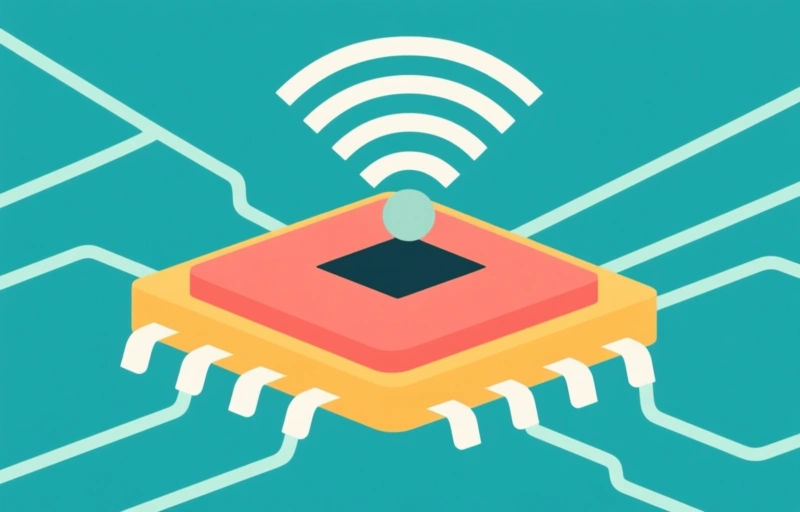
Miniaturized radar on a chip is poised to revolutionize wireless LANs by 2026, giving networks spatial awareness and enabling context-aware, intelligent infrastructure for professionals.
Let's talk about something that sounds like it's straight out of a sci-fi movie, but it's actually happening right now in labs. We're moving beyond just faster Wi-Fi. The next big leap for wireless professionals isn't just about bandwidth—it's about giving networks a sense of sight and spatial awareness. Imagine a wireless LAN that doesn't just transmit data, but understands the physical world around it. That's the promise of miniaturized radar technology being integrated directly onto silicon chips.
This isn't about replacing your current access points tomorrow. It's about the foundational shift happening for the networks we'll be building and managing in 2026 and beyond. The core idea is deceptively simple: shrink the components of a radar system down so small they can be manufactured on a standard computer chip. We're talking about moving from bulky, expensive systems to something that could be embedded in almost any device or networking hardware.
### Why Should Wireless Pros Care About Radar?
You might be wondering what radar has to do with connecting laptops and phones. It's a fair question. Traditional wireless LANs are pretty blind. They know a device is connected and how strong the signal is, but they have no clue if that device is moving, how many people are in the room, or what's happening in the physical space. Chip-based radar changes that game entirely.
It enables what experts call 'context-aware networking.' Your network could detect when a conference room empties and automatically power down APs to save energy. It could sense a crowd forming in a lobby and dynamically adjust bandwidth allocation before anyone complains about slow speeds. It adds a layer of environmental intelligence we've never had before.
### The Real-World Impact on Network Design
For those of us planning and deploying networks, this technology opens up new design paradigms. Think about security. Instead of just monitoring MAC addresses and data flows, a network could detect unusual movement patterns in a secure area after hours. It could differentiate between a person, a pet, or a rolling cart, reducing false alarms from motion sensors.
In dense environments like stadiums or campuses, this spatial data is gold. Network controllers could use real-time people density maps to optimize channel selection and transmission power on the fly. It moves us from reactive troubleshooting to proactive, predictive network management.
Here’s a quick look at what this could enable:
- **Precision Location Services:** Pinpoint device location to within inches, not just which room.
- **Gesture-Based Controls:** Secure, touchless authentication for accessing network resources.
- **Occupancy Analytics:** Provide facilities teams with real-time data on space utilization.
- **Enhanced Safety:** Detect falls or lack of movement in critical areas like server rooms.
### The Challenges on the Road to 2026
Now, it's not all smooth sailing. Integrating this tech brings its own set of headaches. There are significant hurdles around privacy—how do we use this detailed spatial data ethically? Regulations will need to catch up. There's also the issue of spectrum. These radar chips often operate in frequency bands like 60 GHz, which we're also using for high-speed wireless links. Careful coordination and new protocols will be essential to avoid interference.
Then there's the processing power. All this raw radar data creates a massive new stream of information for network controllers to handle. We'll need more edge computing and smarter, AI-driven analytics built right into the network fabric to make sense of it all without drowning in data.
As one researcher aptly put it, *'We're not just building smarter networks; we're giving them a new sense to perceive the world.'* That’s a profound shift in what our infrastructure can do.
### Getting Ready for the Shift
So, what does this mean for you, the wireless professional? Start thinking beyond throughput and coverage maps. Familiarize yourself with concepts like sensor fusion and edge AI. Keep an eye on standards bodies like the IEEE, as new protocols for co-existence and data handling will emerge. The skills needed in 2026 won't just be about RF engineering; they'll be about managing intelligent, sensing networks that interact with physical space.
The move to chip-scale radar is more than an incremental upgrade. It's a fundamental reimagining of the wireless LAN as an active participant in the physical environment. For those ready to adapt, it represents the most exciting frontier in networking since the jump to Wi-Fi 6. The future isn't just wireless; it's perceptive.