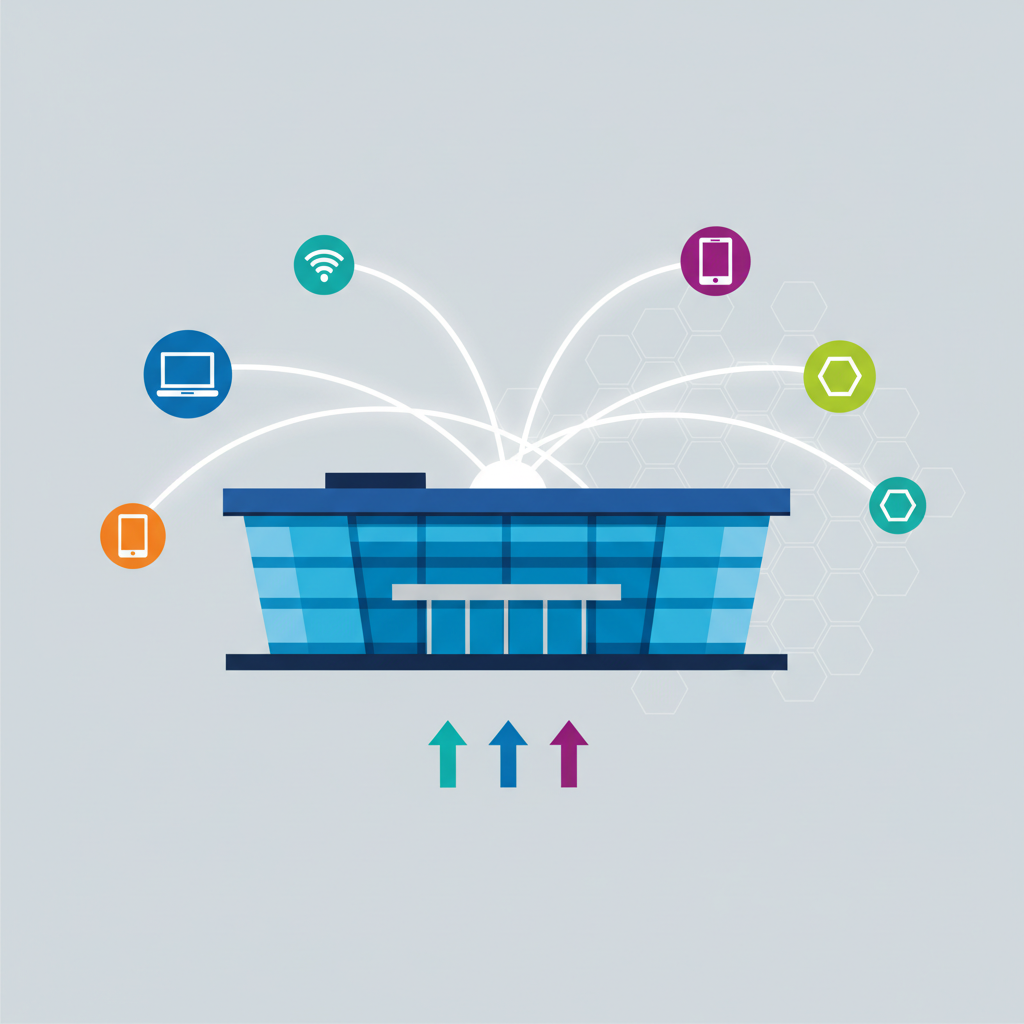
Discover why wireless infrastructure design is the invisible backbone of modern airports. Learn how careful planning keeps 50,000 travelers connected in 2026.
Ever noticed how you just expect your phone to work the second you step into an airport? You don’t think about the wireless network. You just want to stream a movie, check your gate, or hop on a video call without buffering. But behind that smooth experience is a carefully designed invisible network—and it’s way more complex than you’d guess.
Airports aren’t just big buildings. They’re concrete jungles full of metal, glass, and thousands of people all trying to connect at once. If the wireless infrastructure isn’t designed right, you get dropped connections, slow speeds, and frustrated travelers. And in 2026, with even more devices per person, getting it right is crucial.
### Why Airport Wi-Fi Is Different
Your home router covers maybe 2,000 square feet. An airport terminal? We’re talking hundreds of thousands of square feet—sometimes over a million. And it’s not just about size. Airports have unique challenges that make wireless design a real puzzle.
First, there’s the sheer density of users. Think about a busy hub like Atlanta or Chicago O’Hare. You might have 50,000 people in one terminal, each carrying two or three devices. That’s a lot of demand on the network. Plus, those devices are constantly moving—people walking to gates, standing in lines, sitting in lounges.
Second, airports are built with materials that hate wireless signals. Steel beams, concrete walls, and glass curtain walls all block or reflect radio waves. Even the escalators and moving walkways can mess with signal propagation. So planners have to place access points carefully, often in tricky spots like above drop ceilings or behind signage.
### The Hidden Work Behind Seamless Connectivity
You might think wireless is just about putting up a few antennas. Nope. Modern airport networks involve dozens or even hundreds of access points, all coordinated by a central controller. They use technologies like beamforming to focus signals toward users, and they automatically adjust power levels to avoid interference.
Here’s a quick look at what goes into the design:
- **Site surveys**: Engineers walk every inch of the terminal, measuring signal strength and identifying dead zones.
- **Capacity planning**: They estimate how many users will be in each area and plan for peak times—like holiday rushes.
- **Backhaul**: All those access points need a fast connection back to the internet. That means fiber optic cables running through the building.
- **Security**: Public Wi-Fi in airports has to be secure. Networks use encryption and authentication to keep travelers safe.
> “A well-designed wireless network is like a good stagehand—you never notice it, but everything falls apart without it.”
### What Happens When Design Fails
We’ve all been there. You’re sitting at the gate, trying to load a page, and it just spins. Or you’re on a video call and the audio cuts out every 30 seconds. That’s what happens when wireless design doesn’t keep up.
In 2026, the stakes are higher. More travelers rely on their devices for boarding passes, flight updates, and entertainment. Airlines are rolling out apps that need constant connectivity. Even airport operations—like baggage tracking and security screening—depend on wireless networks. A bad connection isn’t just annoying. It can cause delays and lost luggage.
### The Future of Airport Wireless
Looking ahead, airports are experimenting with new tech. Think 5G private networks, Wi-Fi 7, and even Li-Fi (using light to transmit data). Some airports are testing mesh networks that self-heal when an access point goes down. Others are using AI to predict where crowds will form and adjust the network in real time.
But the basics still matter. Good design means planning for today’s needs and tomorrow’s growth. It means working with architects to embed wireless into the building from the start, not as an afterthought.
So next time you’re at the airport and your connection is flawless, take a second to appreciate the invisible network making it happen. It’s a lot more than just a few antennas—it’s engineering at its finest.