Motorola MQ20 Wi-Fi 6E Mesh: Next-Gen Home Coverage
Eleanor Vance ·
Listen to this article~4 min
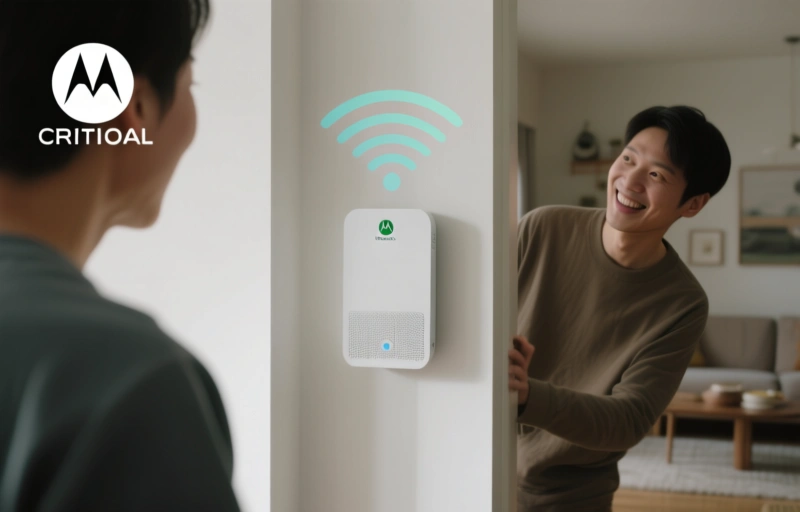
Motorola's MQ20 Wi-Fi 6E Tri-Band Mesh System tackles home dead zones with next-gen 6GHz technology for less interference and a dedicated backhaul channel, promising seamless whole-home coverage for modern connected households.
Let's talk about something that's probably driving you a little crazy right now. You know the feeling. You're trying to stream a movie in the living room, someone's on a video call in the home office, and the smart devices are all chattering away. Suddenly, everything buffers. It's the modern home connectivity struggle, and it's real.
That's where mesh Wi-Fi systems come in, acting like a team of signal boosters working together. And Motorola, a name we've trusted for decades in communications, has thrown its hat into the ring with the MQ20. This isn't just another router; it's a Wi-Fi 6E Tri-Band Mesh System designed to blanket your entire space in a strong, stable signal.
### What Wi-Fi 6E Really Means for You
You've heard the term Wi-Fi 6, but 6E? That 'E' stands for 'Extended,' and it's a game-changer. Think of your Wi-Fi signal like radio stations. For years, we've been crowded into the same popular FM bands. Wi-Fi 6E opens up a whole new, wide-open FM band that no one else is using yet. It's the 6 GHz band.
This means less interference from your neighbor's network, your Bluetooth speaker, even your microwave. It's a cleaner highway for your data, perfect for those high-bandwidth activities we all rely on now. We're talking 4K/8K streaming, lag-free gaming, and crystal-clear video conferencing. The MQ20 taps into this new spectrum to help future-proof your home network.
### The Tri-Band Advantage: Keeping Traffic Moving
A tri-band system is like having a three-lane highway built into your network. The MQ20 uses one band (usually 2.4 GHz) for older, slower devices like smart bulbs. It uses a second band (5 GHz) for most of your everyday devices—laptops, phones, tablets.
Here's the clever part: the third, dedicated band. This one isn't for your devices at all. It's a backhaul channel, a private communication line just for the mesh nodes to talk to each other. This prevents your video call from competing with the signal traveling between the router in the den and the satellite node upstairs. It keeps everything smooth.
### Is the Motorola MQ20 Right for Your Home?
Mesh systems aren't a one-size-fits-all solution, but they solve a very specific problem. If you have dead zones—places where the Wi-Fi just gives up—a single powerful router often isn't the answer. Walls and distance are the enemies. A mesh system like the MQ20 places multiple nodes around your home to eliminate those shadows.
Setting it up is typically far simpler than traditional networks. Most systems use a smartphone app that walks you through placing the nodes and getting everything online in minutes. It's designed for people who just want it to work, not to become network administrators.
As one industry analyst recently noted, 'The true test of any mesh system isn't its peak speed in a lab, but its consistent reliability in the messy, unpredictable environment of a real home.' That's the promise here: consistent coverage everywhere.
Consider the MQ20 if:
- You have a large home or one with challenging layouts (multiple floors, thick walls).
- You have a growing number of smart home devices.
- Multiple people are online simultaneously for work, school, and entertainment.
- You're tired of rebooting your router and want a 'set it and forget it' solution.
Motorola's entry into this space is interesting. They're leveraging a legacy of reliability in wireless. While the market has other strong players, having more competition usually means better features and value for us, the users. The goal is no longer just to get connected, but to stay connected—seamlessly, everywhere in your home. That's the bar the MQ20 is trying to meet.