Private 5G: The Warehouse Robot Connectivity Solution
Sarah Mitchell ·
Listen to this article~4 min
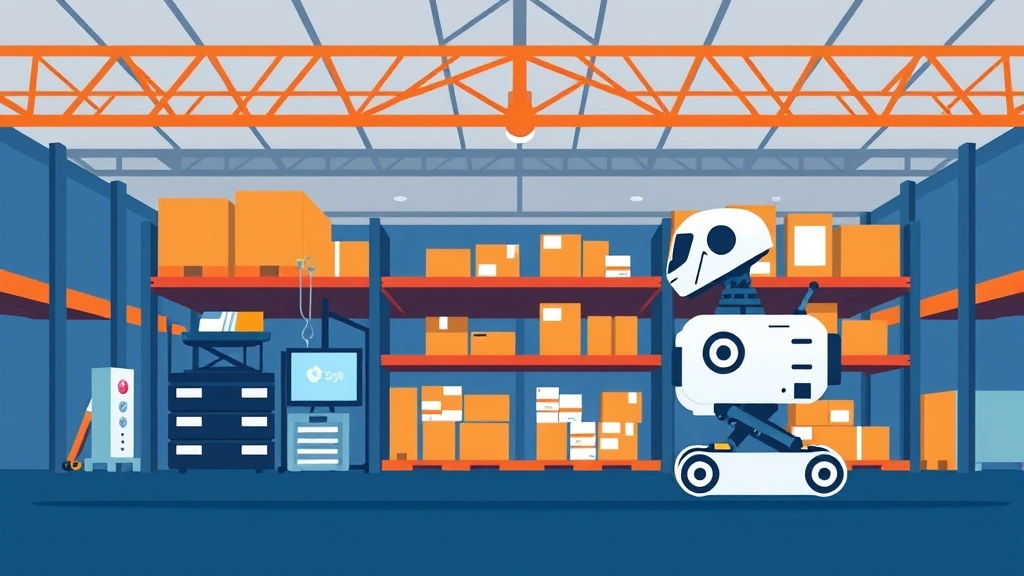
Warehouse robots are transforming logistics, but they need rock-solid connectivity. Discover why private 5G networks are emerging as the essential solution for seamless, large-scale automation.
Let's talk about what's really happening in those massive warehouses you see from the highway. You know, the ones that seem to stretch for miles. Inside, it's not just people stacking boxes anymore. It's robots—dozens, sometimes hundreds of them—zipping around, moving inventory with precision. But here's the problem they've been facing: keeping them all connected and talking to each other without a hitch.
Traditional Wi-Fi, the kind you have at home or in an office, just doesn't cut it in these vast, metal-filled spaces. Signals get lost. Connections drop. For a robot carrying a pallet worth thousands of dollars, a dropped signal isn't just annoying—it's a costly operational nightmare.
### Why Wi-Fi Falls Short in Warehouses
Think about your own Wi-Fi at home. How often does the signal get weak when you're just a room or two away from the router? Now imagine a space that's 500,000 square feet or more, filled with tall metal shelving units that block signals. The robots need constant, real-time communication. A lag of even a second can cause a traffic jam or, worse, a collision.
That's where private 5G networks are stepping in as the game-changer. Unlike public 5G from your phone carrier, a private 5G network is built just for that one facility. It's like having your own private, ultra-fast highway for data, right inside your four walls.
### How Private 5G Solves the Robot Puzzle
So, what makes private 5G so special for this job? A few key things:
- **Massive Coverage:** A single private 5G cell can cover an area of several hundred thousand square feet, easily blanketing an entire warehouse floor without dead zones.
- **Super Low Latency:** This is the big one. Latency is the delay before a transfer of data begins. Private 5G can get that delay down to mere milliseconds. When a central system tells a robot to stop or turn, it happens almost instantly.
- **Handles Crowds Beautifully:** Wi-Fi struggles when too many devices connect at once. Private 5G is built to handle hundreds, even thousands, of connected devices—robots, sensors, scanners—all at the same time without breaking a sweat.
It's not just about preventing crashes. This reliable connection allows for more sophisticated coordination. Robots can work in swarms, dynamically rerouting around obstacles or congestion, all orchestrated in real-time. The efficiency gains are staggering.
### The Real-World Impact on Operations
Let's put this in practical terms. A major logistics company reported that after implementing a private 5G network, their autonomous mobile robots (AMRs) saw a 99.9% connectivity uptime. Pick-and-place operations became 40% faster because the robots weren't waiting for instructions or getting lost.
One warehouse manager I spoke to put it simply: "It turned our robots from expensive, glitchy tools into a truly synchronized team. It's the difference between a group of talented musicians playing separately and a conductor leading an orchestra."
The initial investment isn't small—we're talking tens to hundreds of thousands of dollars depending on the facility size. But the return comes fast through reduced downtime, fewer errors, and the ability to scale up the robot fleet without worrying about the network crumbling under the pressure.
### Looking Ahead to 2026 and Beyond
As we move toward 2026, this isn't just a niche experiment. It's becoming the standard for any large-scale automated warehouse. The technology is proving itself not as a fancy upgrade, but as the essential backbone that makes advanced automation possible and profitable.
The next wave will likely involve even tighter integration. Imagine robots, IoT sensors on shelves, and wearable tech on human workers all sharing data on the same private 5G network, creating a living, breathing map of the entire warehouse's operations every single second.
So, if you're planning a warehouse automation project, don't just budget for the robots. The network they run on is just as critical. And right now, for large, complex environments, private 5G is looking like the only connection strong enough to handle the future.