Stadium WiFi Upgrade: Meeting Surging Fan Connectivity…
Sarah Mitchell ·
Listen to this article~4 min
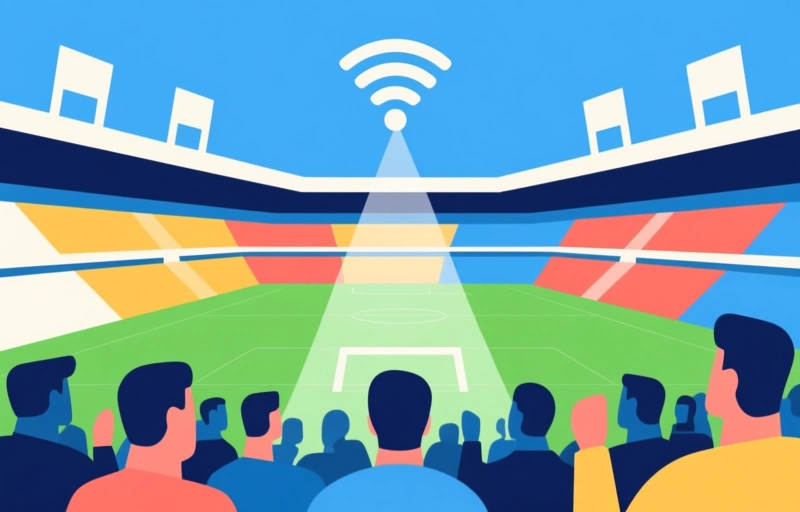
Cities and sports franchises are racing to overhaul stadium WiFi networks as fan demand for connectivity skyrockets. Learn why dense, high-speed internet is now critical for the modern game-day experience and revenue.
Let's talk about something that's becoming as essential as hot dogs and seventh-inning stretches at ballgames: stadium WiFi. You know the feeling. You're at a packed arena, trying to share a video of that incredible touchdown or three-pointer, and your phone just... gives up. It's not just frustrating for fans; it's a massive challenge for the cities and teams that own these venues.
They're scrambling to upgrade because fan demand isn't just growing—it's exploding. We're not just talking about checking scores anymore. It's live streaming from your seat, ordering food and merch right to your section, and diving into augmented reality experiences that make you feel like you're on the field. The old networks, bless their hearts, just can't handle the modern game day.
### Why Stadium WiFi is Suddenly a Top Priority
Think about what's changed. A decade ago, you might send a text. Today, everyone in a 60,000-seat stadium has a device, and most are using data-hungry apps simultaneously. It's like trying to pour a gallon of water through a straw. The pressure comes from fans who expect the same connectivity they have at home or in a coffee shop, even when surrounded by tens of thousands of others.
Cities and franchise owners are realizing that poor WiFi isn't just a minor annoyance—it hurts the bottom line. If fans can't use mobile ordering, concession sales suffer. If they can't engage with interactive content, sponsorship opportunities vanish. A bad digital experience can actually tarnish the brand of the team and the city itself.
### The Tech Game Plan for Dense Connectivity
So, what's the solution? It's not about adding one or two more routers. We're talking about a complete architectural overhaul. Here’s what the leading venues are implementing:
- **High-Density Access Points:** Installing hundreds, sometimes thousands, of specialized nodes throughout concourses, seating bowls, and even parking lots.
- **Fiber Backbone:** Creating a super-highway of fiber optic cable to carry all that data in and out of the venue without bottlenecks.
- **Advanced Network Management:** Using smart software that dynamically allocates bandwidth, prioritizing critical services like point-of-sale systems while still giving fans a solid experience.
- **5G and Wi-Fi 6E Integration:** Leveraging the latest standards that are built for crowded environments, offering faster speeds and more reliable connections.
It's a significant investment, often running into the millions of dollars for a major league stadium. But the return isn't just in happy fans. The data collected from a robust network is a goldmine for understanding fan behavior and personalizing future experiences.
As one network engineer for a major NFL stadium put it, *"We're not just providing internet; we're building the central nervous system for the entire fan experience. Every touchpoint, from the ticket gate to the final whistle, flows through it."*
The goal is seamless connectivity. You shouldn't have to think about it. It should just work, letting you focus on the game, the concert, or the event you paid to see. The cities and teams that get this right are investing in their future, ensuring their venues remain competitive and desirable for decades to come. After all, in today's world, a dead zone in the stands is almost as bad as a dead spot in the performance.