Tiny Radar Chips: The Secret to Future Wireless Networks
Sarah Mitchell ·
Listen to this article~4 min
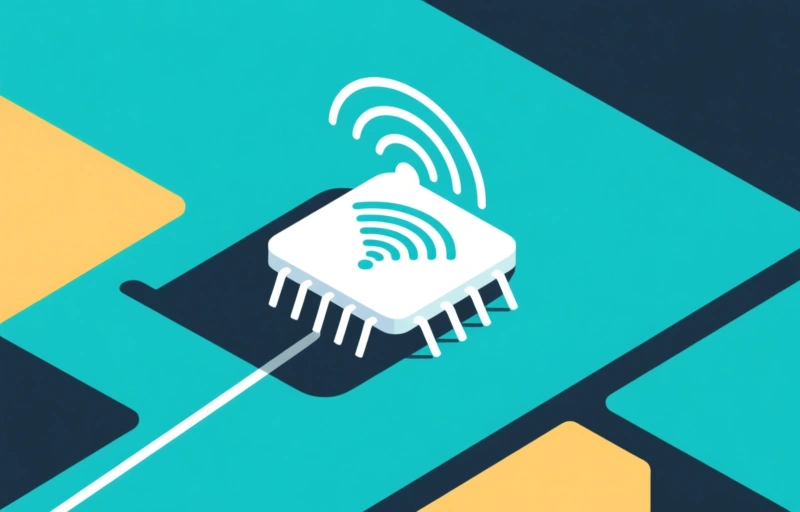
Discover how miniaturized radar chips are set to revolutionize wireless LAN in 2026, adding environmental sensing for smarter, more efficient, and secure enterprise networks.
Hey there, network pro. Let's talk about something that sounds like science fiction but is about to become your new reality. We're moving beyond just faster Wi-Fi. The next big leap in wireless LAN solutions is hiding in a chip smaller than your fingernail. It's a miniaturized radar chip, and it's poised to completely reshape how we think about connectivity in 2026 and beyond.
Think about the challenges you face every day. Dead zones in a large office. Spotty coverage in a warehouse. The constant battle for bandwidth. These tiny chips are being engineered to solve those problems in a fundamentally new way. They don't just transmit data; they sense the environment.
### How Does a Radar Chip Work in a Network?
It's a fair question. We're used to routers sending and receiving radio waves for data. This new tech adds a layer of perception. Imagine your access point not only providing a connection but also understanding the physical space around it. It can detect movement, occupancy, and even the layout of a room. This isn't about surveillance; it's about intelligent optimization.
For instance, if the chip senses a conference room is empty, it could dynamically reduce power to that sector, freeing up resources for the crowded open-plan area. It's like your network gains a sense of sight.
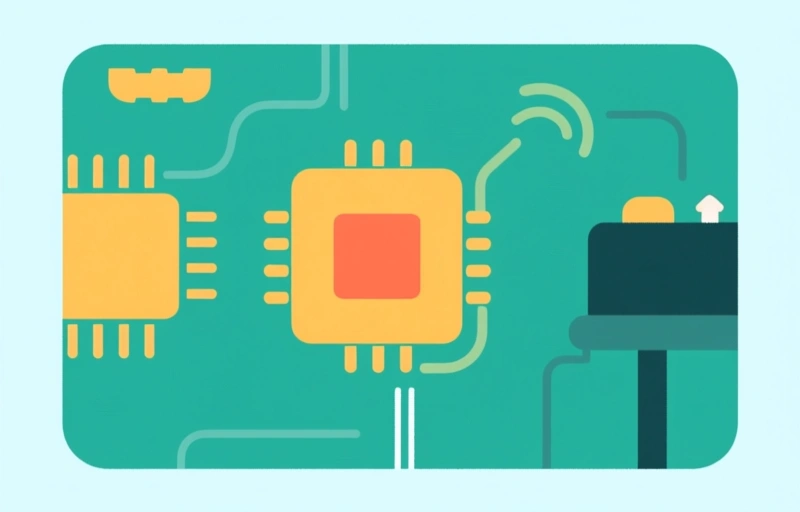
### The Tangible Benefits for Your Business
So, what does this mean for you when planning your 2026 wireless LAN rollout? The advantages are pretty compelling.
- **Proactive Performance:** Instead of reacting to user complaints about slow speeds, the network can predict and prevent congestion by understanding traffic flow and density in real time.
- **Enhanced Security:** Unauthorized physical access or suspicious loitering near sensitive equipment could trigger alerts, adding a physical layer to your cybersecurity posture.
- **Smart Building Integration:** This data can feed into HVAC and lighting systems, helping to create truly intelligent, efficient, and responsive workspaces. It's a step toward self-healing networks.
One engineer working on the project put it well: 'We're not just building a faster pipe. We're giving the network a nervous system.' That shift in thinking is what will define the next generation of enterprise wireless.
### What to Look For in 2026 Solutions
As this technology matures and hits the market, you'll want to keep a few key points in mind. First, consider the processing. All this environmental data needs to be handled intelligently, likely at the edge, to avoid latency. Look for solutions that emphasize on-device analytics.
Second, think about integration. Your new radar-enabled access points need to play nice with your existing network management and security frameworks. Vendor lock-in with this new tech could be a real headache.
Finally, and this is crucial, privacy. Any system that senses the physical environment must have robust, transparent privacy controls built in from the ground up. It's a non-negotiable for any enterprise deployment.
The move to 6GHz spectrum and Wi-Fi 7 is exciting, but it's still fundamentally about more bandwidth. This radar chip technology represents a different kind of evolution—one of network intelligence. It suggests a future where your wireless LAN isn't just a utility, but an active, aware partner in your business operations. For professionals planning ahead, that's a future worth getting ready for.