Discover how the packet-switching principles behind modern wireless LANs could revolutionize America's aging railroads, boosting efficiency and cutting delays. A fresh perspective for IT pros.
Have you ever wondered why your Wi-Fi signal can seamlessly hand off between access points as you walk through an office, yet a train can't smoothly switch tracks without a delay? It's a weird comparison, I know. But stick with me. The way wireless networks handle data packets actually holds some serious lessons for America's railroads. And honestly, it's kind of brilliant when you think about it.
### The Packet-Switching Parallel
At its core, a wireless network doesn't hold a dedicated line for every conversation. Instead, it chops data into small packets, sends them along the best available path, and reassembles them at the destination. This is called packet switching. Railroads, on the other hand, still operate on a circuit-switched model. A train gets a dedicated track segment, and no one else can use it until the train passes. That's like having a phone call where the entire line is reserved just for you, even during silence.
- **Efficiency:** Wireless networks use resources dynamically. Railroads waste capacity by reserving track miles ahead.
- **Flexibility:** If a wireless link fails, packets reroute instantly. If a track fails, trains often stop completely.
- **Scalability:** Adding more devices to a network is easy. Adding more trains to a rail system requires massive infrastructure.

### Why Railroads Are Stuck in the Past
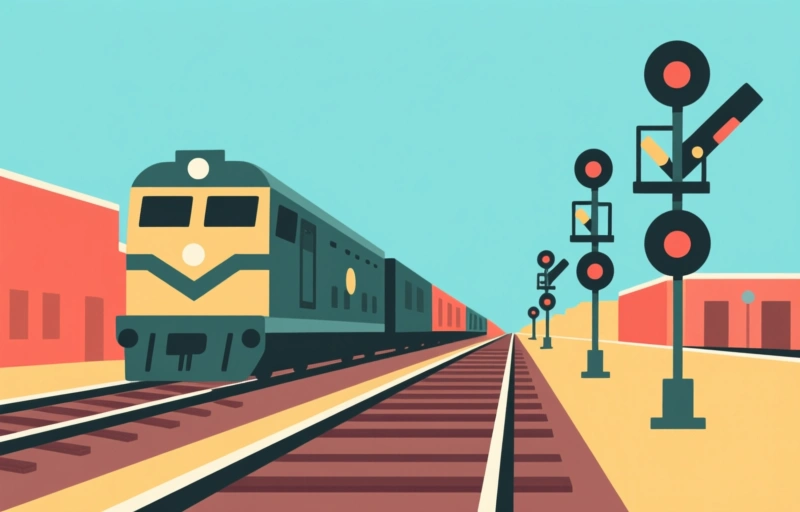
America's rail system is aging. Many signals still rely on physical trackside circuits that can't communicate with each other. A train's location is often determined by a human calling in from a station. Compare that to a modern Wi-Fi 6 network, where every device knows its position within a few feet and can report it instantly. The difference is night and day.
> "The railroad industry has been using the same basic technology for over a century. It's like running a 5G network on vacuum tubes."
This quote from a transportation analyst I spoke with really drives it home. The rail industry needs a digital backbone that mirrors what wireless networks have been doing for decades. Think of it as a software-defined railway. Instead of fixed schedules and rigid track assignments, trains could negotiate their paths in real time, just like your laptop negotiates bandwidth with a router.
### What We Can Learn Right Now
For IT professionals in the United States, this isn't just an academic exercise. The same principles that make wireless LANs efficient can be applied to any system that moves things or data. Whether you're managing a warehouse with autonomous robots or a fleet of delivery trucks, the lessons are the same.
- **Real-time data matters.** Don't rely on static schedules. Use sensors and wireless links to know exactly where everything is.
- **Redundancy is essential.** A good wireless network has multiple access points. A good logistics system needs multiple routing options.
- **Standardization wins.** Wi-Fi works because every device follows the same standard. Railroads need a unified communication protocol, not a patchwork of proprietary systems.
### The Bottom Line
America's railroads don't need to reinvent the wheel. They just need to borrow a page from the wireless playbook. Packet switching, dynamic routing, and real-time feedback aren't just buzzwords. They're proven solutions that could save billions of dollars and eliminate countless delays. If a $50 Wi-Fi router can manage hundreds of devices without breaking a sweat, surely we can figure out how to move a few dozen trains more efficiently.
So next time you're stuck at a railroad crossing watching a slow freight train, remember: the solution might already be in your pocket. It's just a matter of applying the right network thinking.