WLAN Market Trends: Key Sub-Segments for 2026
Sarah Mitchell ·
Listen to this article~3 min
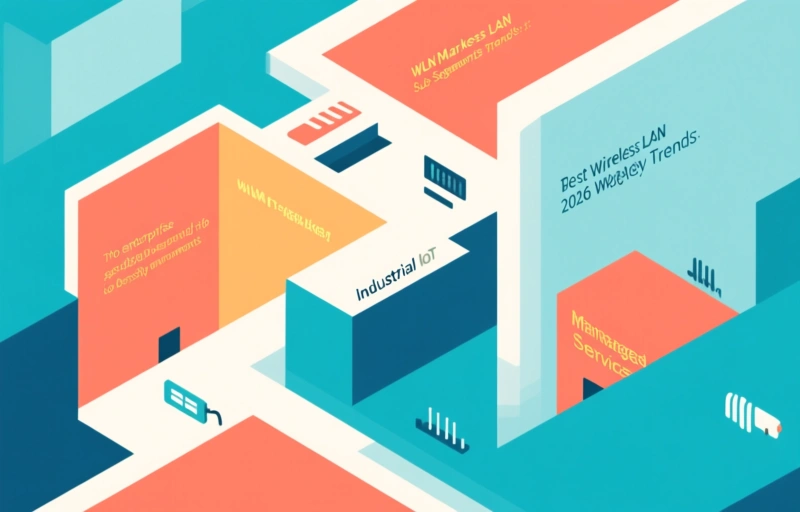
The enterprise WLAN market is splitting into specialized sub-segments for high-density environments, industrial IoT, and managed services. Discover what's changing and how to choose the right solution for your business in 2026.
The enterprise wireless LAN (WLAN) market is evolving faster than ever. While most of us just want Wi-Fi that doesn't drop during a Zoom call, the industry is quietly reshaping itself around some fascinating new sub-segments. Let's break down what's happening and why it matters for your business.
### The Big Picture
For years, enterprise WLAN was pretty straightforward. You bought access points, hooked them up, and hoped for the best. Now? Things are getting interesting. The market is splitting into specialized niches that serve very different needs.
Think of it like the difference between a Swiss Army knife and a specialized chef's knife. Both cut things, but one does everything okay while the other excels at one specific job. That's where enterprise WLAN is heading.
### Three Sub-Segments to Watch
Let's look at the main areas driving this transformation:
- **High-Density Environments** - Stadiums, convention centers, and airports need WLAN that handles thousands of devices without choking. These systems are built for massive throughput and seamless roaming.
- **Industrial IoT** - Factories and warehouses rely on Wi-Fi for robots, sensors, and inventory tracking. Reliability and low latency are non-negotiable here.
- **Managed Services** - More companies are outsourcing their WLAN to providers who handle everything from setup to monitoring. It's cheaper and less headache.
Each sub-segment demands different hardware, software, and expertise. A solution that works for a football stadium won't cut it in a factory floor.

### Why This Matters for Your Bottom Line
Here's the thing: if you're still buying WLAN like it's 2019, you're probably overpaying. Specialized solutions often cost less in the long run because they're optimized for your specific use case.
> "The one-size-fits-all approach to WLAN is dead. Companies that embrace specialization will see better performance and lower costs." - Industry insider
For example, a warehouse using industrial IoT WLAN might save $10,000 a year in downtime costs compared to a generic setup. That's real money.
### What to Look for in 2026
When you're shopping for WLAN solutions next year, keep these factors in mind:
- **Scalability** - Can the system grow with your needs? Don't buy for today; buy for tomorrow.
- **Security** - With more devices connecting, encryption and threat detection are critical.
- **Support** - Managed services can save you from hiring a dedicated IT team.
### The Bottom Line
The enterprise WLAN market is splitting into specialized sub-segments, and that's a good thing. Whether you're running a stadium, a factory, or an office, there's a solution tailored for you. Just make sure you're not paying for features you don't need.
Stay ahead of the curve, and your Wi-Fi will thank you.